Beware of Out-of-Control Discounts! How to Create Promos and Still Make a Profit
Read also: Affordable POS Apps 2026: Complete & Budget-Friendly Solutions for SMEs
*How do you create promotions that don't result in losses?* The main key to keeping promos profitable is accurately calculating your Cost of Goods Sold (COGS) before determining the discount margin. Avoid massive percentage discounts that erode your *net profit margin*. Instead, utilize bundle pricing tricks, cross-selling strategies, or customer loyalty programs. Finally, use an automated discount management POS system like ReBill POS to prevent financial leakage due to cashiers miscalculating change or committing fraud during discount input.
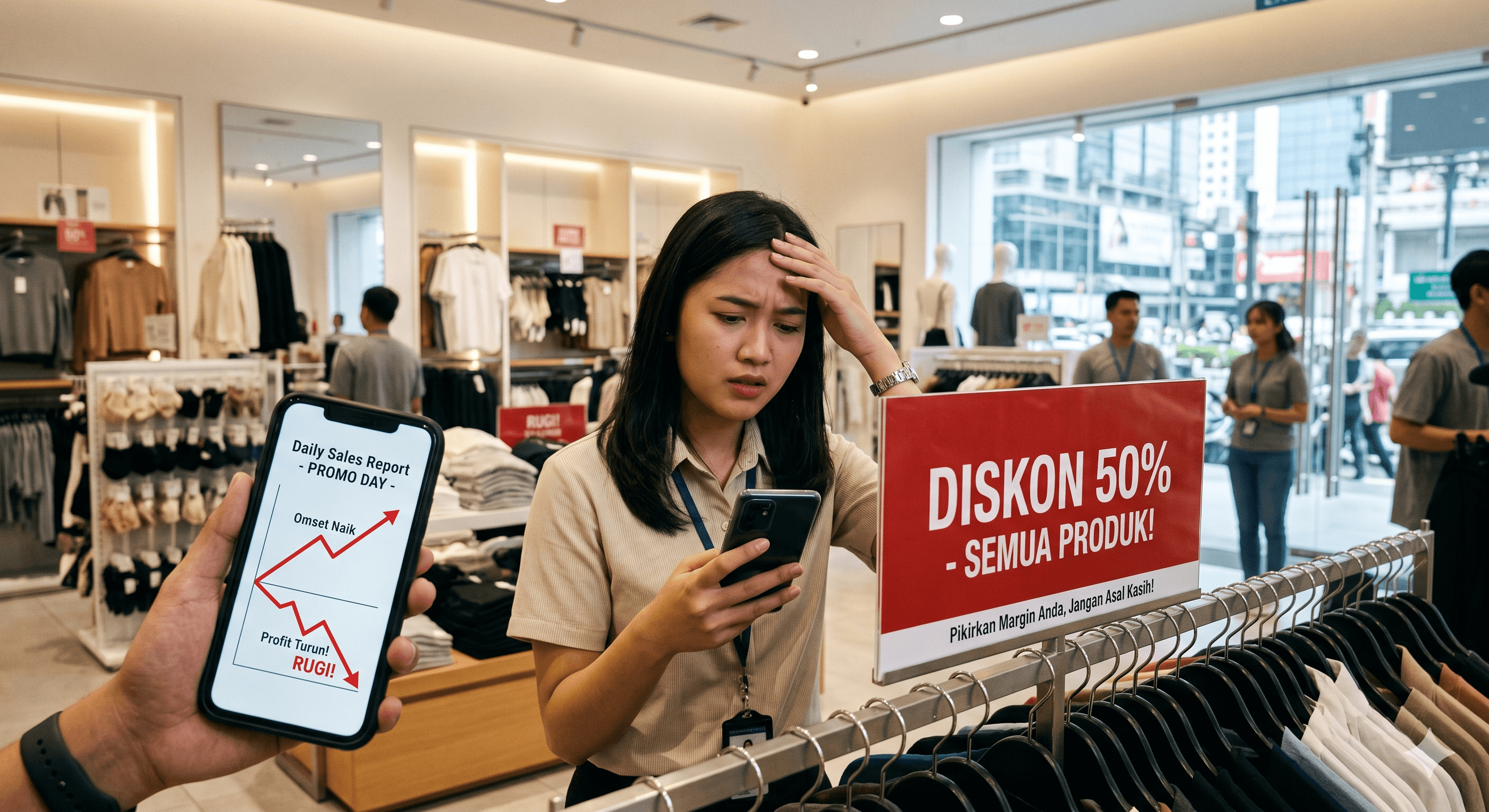
Seeing a long line in front of your store during a promotional period is indeed exciting. However, many SME and F&B business owners experience a nightmare at the end of the month: high sales reports, but skyrocketing revenue accompanied by plummeting profits. This is what we call an *out-of-control discount*.
Implementing a discount strategy is indeed the most powerful product promotion method. Unfortunately, if not calculated correctly, discounts can actually cause losses. Your intention to penetrate the market might instead trap you in a cash-burning strategy that drains your operational funds.
If you are looking for safe ways to create promos, effective sales promo ideas, and want to know why promos end up causing losses, you are in the right article. Let's thoroughly dissect how to calculate COGS, choose the right type of promo, and execute it without fear of losing money.
1. Basic Calculations: Don't Just Randomly Give 50% Discounts!
Read also: Customer Membership Programs 2026: Hassle-Free Loyalty Strategies for F&B & SMEs
The biggest mistake novice entrepreneurs make when looking for ways to attract new customers is immediately deploying crazy discount strategies without understanding their financial foundation. Before brainstorming cafe discount ideas or end-of-month promos, you must know how to calculate discount prices correctly.
- Understand COGS (Cost of Goods Sold): You must know how to calculate the COGS for every menu item or product. This is your absolute base capital cost.
- Calculate Gross Profit vs. Net Profit Margins: Once you know your COGS, learn how to calculate profit margins. Ensure the selling price after the discount still leaves room for gross margin and net profit margin to cover operational costs (payroll, electricity, rent).
- Determine the Break-Even Point (BEP): Know your break-even limit. This is the ultimate guide on how to ensure your promo doesn't lose money. Never offer a promo price below the BEP unless you are intentionally running a *loss leader strategy* (selling one product at a loss to entice customers to buy high-profit items).
Knowing the formula for calculating discounts and calculating sales profit and loss is a healthy way to determine selling prices for the sustainability of your business.
2. Promo Strategies to Attract Customers (Without Losing Money)
Read also: How to Check Store Sales Reports Remotely (Even While on Vacation!)
How do you calculate the correct discount margin? Don't just fixate on direct price cuts. Here are smart SME promotion strategies and sales promo ideas proven to be effective ways to increase sales revenue:
1. Promo Bundling Tricks: Combine best-seller products with slow-moving ones. This is brilliant bundle pricing and a great way to control inventory. 2. Cross-Selling & Upselling Strategies: Train your cashiers to use upselling techniques. For example, *"Add $1 for a Large size?"* This is a trick to sell out food quickly without slashing the main price. 3. Strikethrough Pricing Strategy: This utilizes price psychology. Display the original price crossed out next to the discounted price. This is a visually appealing way to create discounts. 4. Buy 1 Get 1 Free (BOGO) Discounts: Perfect for grand opening promo examples. Ensure the margin of the 1 paid item covers the COGS of both items. 5. Customer Loyalty Programs: Instead of giving one-off discounts, offer member promo points. What's the difference between a discount and cashback? Cashback/points force customers to return, increasing the *customer retention rate*, making it a great way to keep customers coming back. 6. Flash Sale Strategy: Offer massive discounts but limit the time (e.g., only 2 hours). This creates urgency and is a rapid closing technique.
Comparison Table of Restaurant & Retail Promo Effectiveness
To simplify your business operational management, check out this comparison table:
| Promo Type | Impact on Revenue | Risk of Loss | Best Used For |
|---|---|---|---|
| Percentage Discount (e.g., 20%) | High | ⚠️ Medium | Ways to attract new customers / Clearance sales. |
| Bundling / Package Promos | Very High | ✅ Low | Increasing *inventory turnover* / Ways to make merchandise sell fast. |
| Buy 1 Get 1 Free (BOGO) | High | ⚠️ Medium - High | Attractive food promos / Introducing new menu items. |
| Member Points / Cashback Promos | Medium | ✅ Very Low | Maintaining long-term customer loyalty. |
3. The Latent Danger of Promos: Financial Leakage and Cashier Fraud
Read also: How to Set Up Tax & Service Charges on Receipts (To Avoid Tax Fines)
Creating catchy promo phrases is easy. Teaching how to create non-loss-making promos on paper is also easy. The main problem lies in field execution.
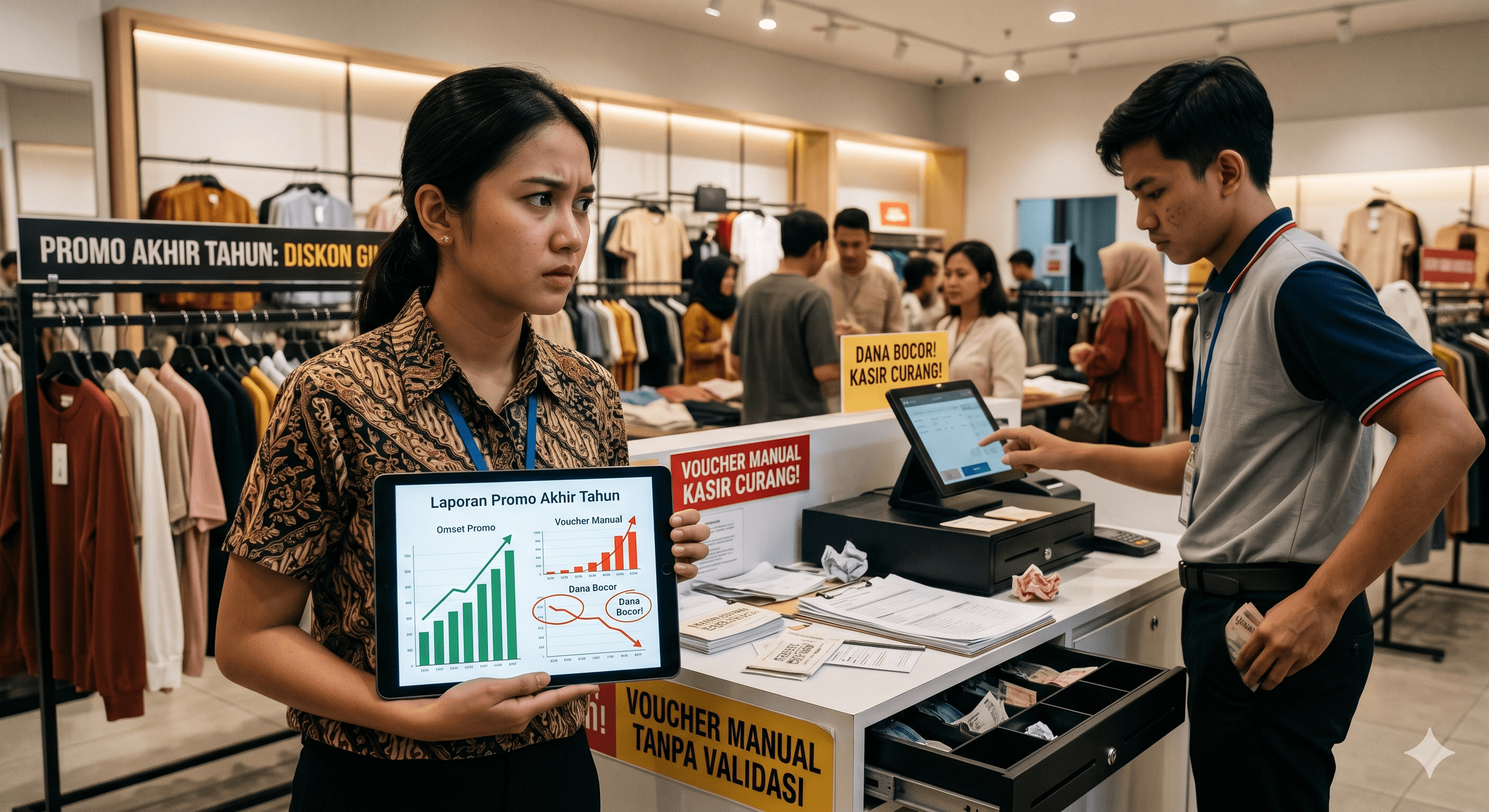
Why do promos end up causing losses? When the store is at its busiest serving end-of-year promos for SMEs, operational loopholes start to appear:
- Cashiers Miscalculating Change: Because of long lines and cashier fatigue calculating a 15% discount manually.
- Cashiers Inputting the Wrong Discount: Forgetting to enter the discount voucher code, causing sales reports to be unbalanced.
- Stock Running Out During Promos: No reminders, leading to disappointed customers. This causes raw material stock discrepancies.
- Employee Fraud: This is the most terrifying. Employees secretly giving discounts to their friends without digital promo validation. This is the main cause of restaurant financial leakage.
You can no longer rely on manual logbooks. Manual sales recaps are a hassle and prone to manipulation. You need professional tools.
4. The Solution: Automate Promos with ReBill POS
Read also: Come Discover the Top 15 Best Indonesian POS Apps 2026 (Android & Cloud POS)
Why do businesses need a POS app to manage discounts? The answer is to lock down the system and save your *net profit*. Out of the many POS app lists, you need a robust daily sales recording app.
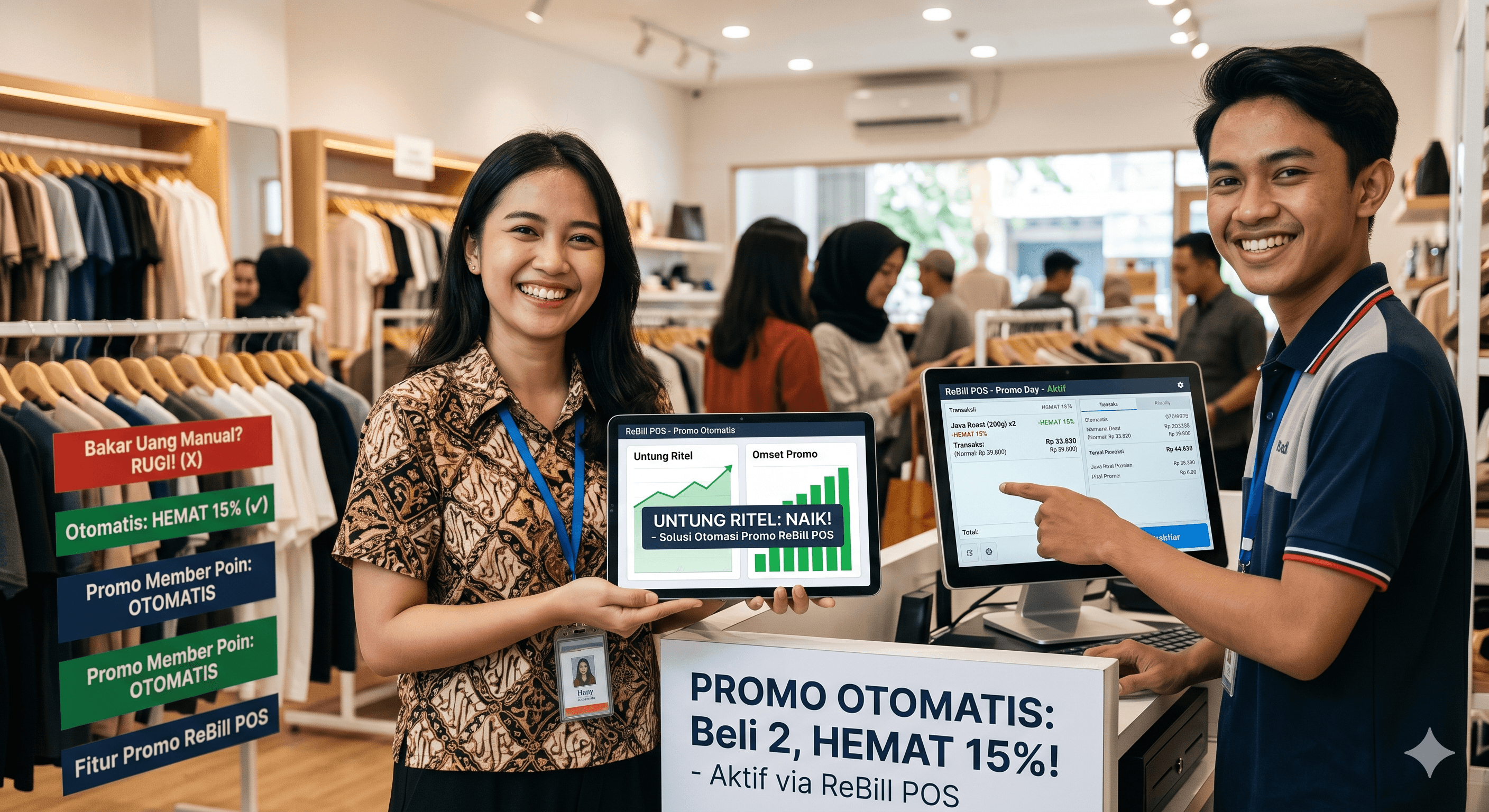
This is where the crucial role of ReBill POS comes in. As the best POS system for cafes and retail, the ReBill POS promo feature is specifically designed to solve all the pain points above.
- Automated Discount POS Software: You can set up automated promos in the POS app straight from the *back-office*. When a cashier inputs a menu item, if the conditions are met, the discount is automatically deducted. No more drama over cashiers miscalculating change.
- Inventory Management POS System: The advantage of ReBill POS is its direct connection to inventory. Every bundled menu item sold will automatically deduct the correct raw material COGS.
- Anti-Fraud Cash Register: How to prevent cashier fraud is through authorization features. Preventing employees from manipulating discounts becomes easy because every cancellation or special discount requires a special manager/owner PIN.
- Automated Sales Reports: Forget about messy SME financial reports. You can monitor and track daily revenue in *real-time* to ensure the *Return on Investment (ROI)* from your promotional costs (Customer Acquisition Cost / CAC) remains in surplus.
How to use ReBill POS to set up promos is incredibly easy. Whether you are looking for a restaurant POS app, SME POS app, or F&B POS app, automate your business right now.
Don't let your massive revenue evaporate simply due to messy execution. Build a secure promo system, monitor reports smartly, and let the ReBill POS app keep your business profits thick!